by Vand Magazine Editorial Team
Ao Miyasaka brings “Death to Violence” to New York Fashion Week—a funeral for the past and a manifesto for the future.
New York Fashion Week is often a spectacle of aspiration—a place where dreams are sold in silk and sequins. But for Ao Miyasaka, a 2000-born creator representing the new wave of Japanese design, the runway is not a place for fantasy. It is a battleground.
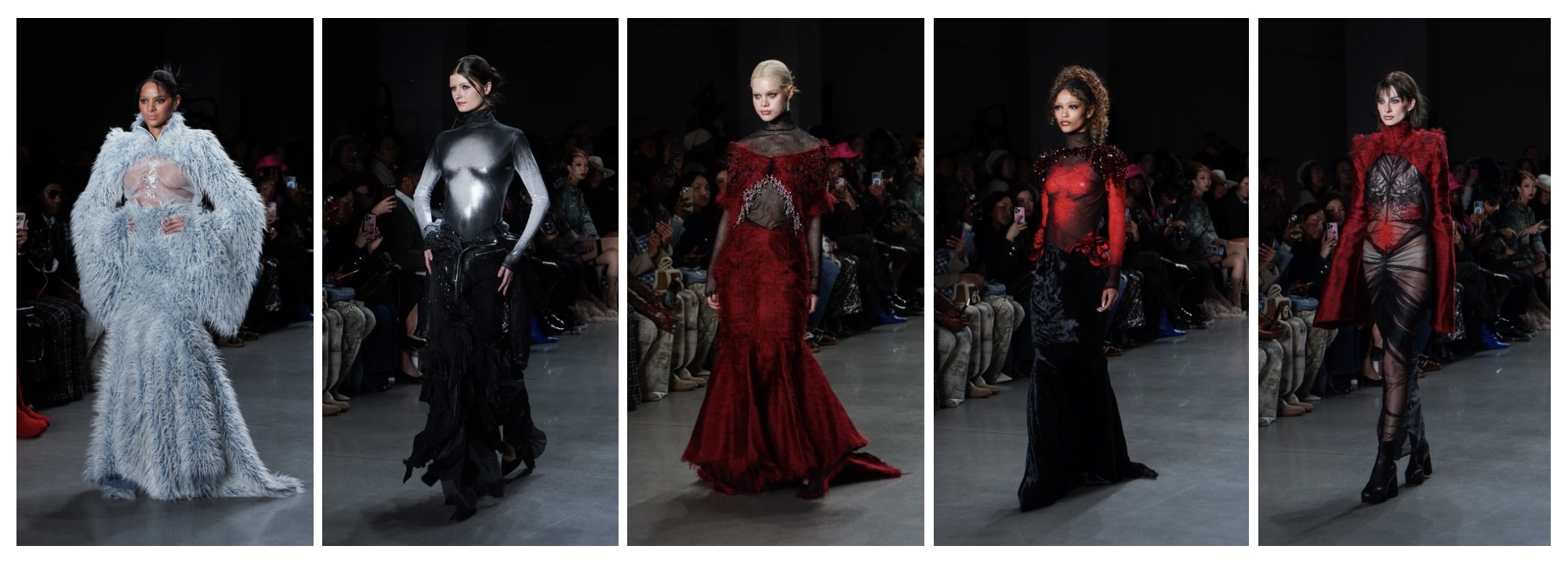
Miyasaka arrives in New York not with a collection of “pretty clothes,” but with a concept she calls “Death to Violence.” It is a heavy, almost suffocating title for a fashion collection, but one that is necessary. Drawing from the concept of ‘Soul Murder’—the psychological destruction caused by abuse—Miyasaka challenges the safety of the status quo.
Her work is a collision of traditional Japanese craftsmanship and the raw, unfiltered rage of a generation tired of looking away. At Vand, we believe in “Modern Heritage”—the idea that tradition must evolve to survive. Miyasaka takes this a step further: she believes tradition must be a weapon to protect the vulnerable.
Vand: The concept “Death to Violence” is incredibly potent. Was there a specific moment that triggered this?
Ao Miyasaka: Are you familiar with the term ‘Soul Murder’? It is a term used to describe domestic violence against children and the trauma inflicted upon victims of sexual crimes. The country where I grew up [Japan] is generally regarded globally as a safe land. However, in recent years, ‘family issues’ and a ‘naive perception of sexual victimization’ have been brought sharply into the light.
After accumulating about 50 exhibitions since 2021, witnessing violence occurring in real-time within society—and feeling the profound shallowness of awareness toward it—I felt a rage, sadness, and emptiness rising from the bottom of my gut.
「サクセスストーリー」をわざわざつくって商売にする風潮が嫌いです。
“I detest the current trend of fabricating ‘success stories’ to commercialize trauma.”
むしろそのような経験をしてもなお日常生活をきちんと行い生きている人たちはとても強い人間だと私は思います。
“I believe that those who have lived through such experiences and still manage to carry on with their daily lives are incredibly strong human beings.”
Editor’s Note: Soul Murder (Tamashii no satsujin)
In Japanese psychology and sociology, this term refers to the catastrophic impact of abuse, implying that while the victim’s physical body survives, their core sense of self and dignity is destroyed. Miyasaka uses this heavy terminology to refuse the “polite silence” often expected in Japanese society regarding domestic issues.
Vand: Your visuals are aggressive—dragons, skulls, sharp contrasts of red and black. Why use such intense imagery to express a concept as gentle as “Love”?
Ao Miyasaka:
愛が循環することは自然な事ではなかったからです。
“Because the circulation of love was never a natural occurrence.”
Vand: You treat embroidery not as mere decoration, but as a “ritual.” Is it a meditative process for you?
Miyasaka: I view it as a re-editing of identity (アイデンティティの再編集). Since ancient times, embroidery has been a vital display of identity—signifying tribes, communities, or social standing. Because I translate my own drawings and the tattoos on my body into the medium of embroidery, it feels less like a mere string of threads and more like a reclamation of self. To put it in perspective: if we speak of Kimono, it feels like wearing a garment passed down through generations.
Vand: Speaking of tattoos, you are bringing the aesthetic of Wabori (Japanese tattooing) to a couture runway. Are you trying to change the stigma around it?
Miyasaka: I have no intention of trying to change perceptions. That is the domain of the Horishi (traditional tattoo artists). I simply love Wabori and research it as a form of bodily expression. Regardless of my opinion, the art form is undeniably magnificent.
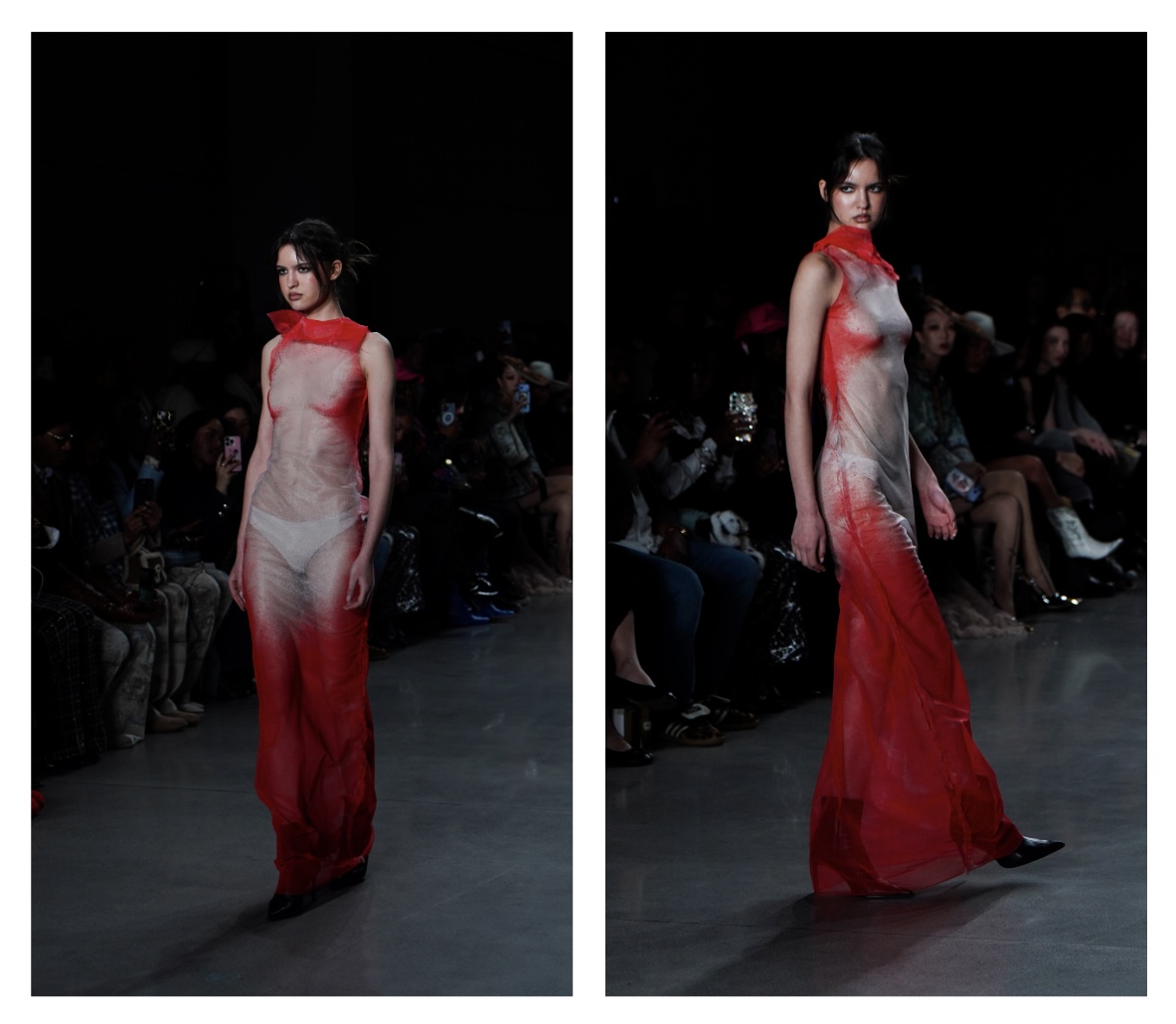
Vand: This collection features a rare textile combining Washi paper and Velvet. What does this material represent in terms of fragility and strength?
Ao Miyasaka: I will never forget discovering this Washi-Velvet at the bottom of a warehouse in Fukui Prefecture. It was a moment of true realization—understanding that this is craftsmanship.
However, in this collection, I separate the ‘cultural default’ from ‘what lies beyond it.’
伝統は守られる物ではなくリスペクトを持って発展させていく事が重要であり、今ある技術を継承していく唯一の方法だと思っています。
“I believe tradition is not something to be merely protected, but something to be developed with respect. That is the only way to inherit existing techniques.”
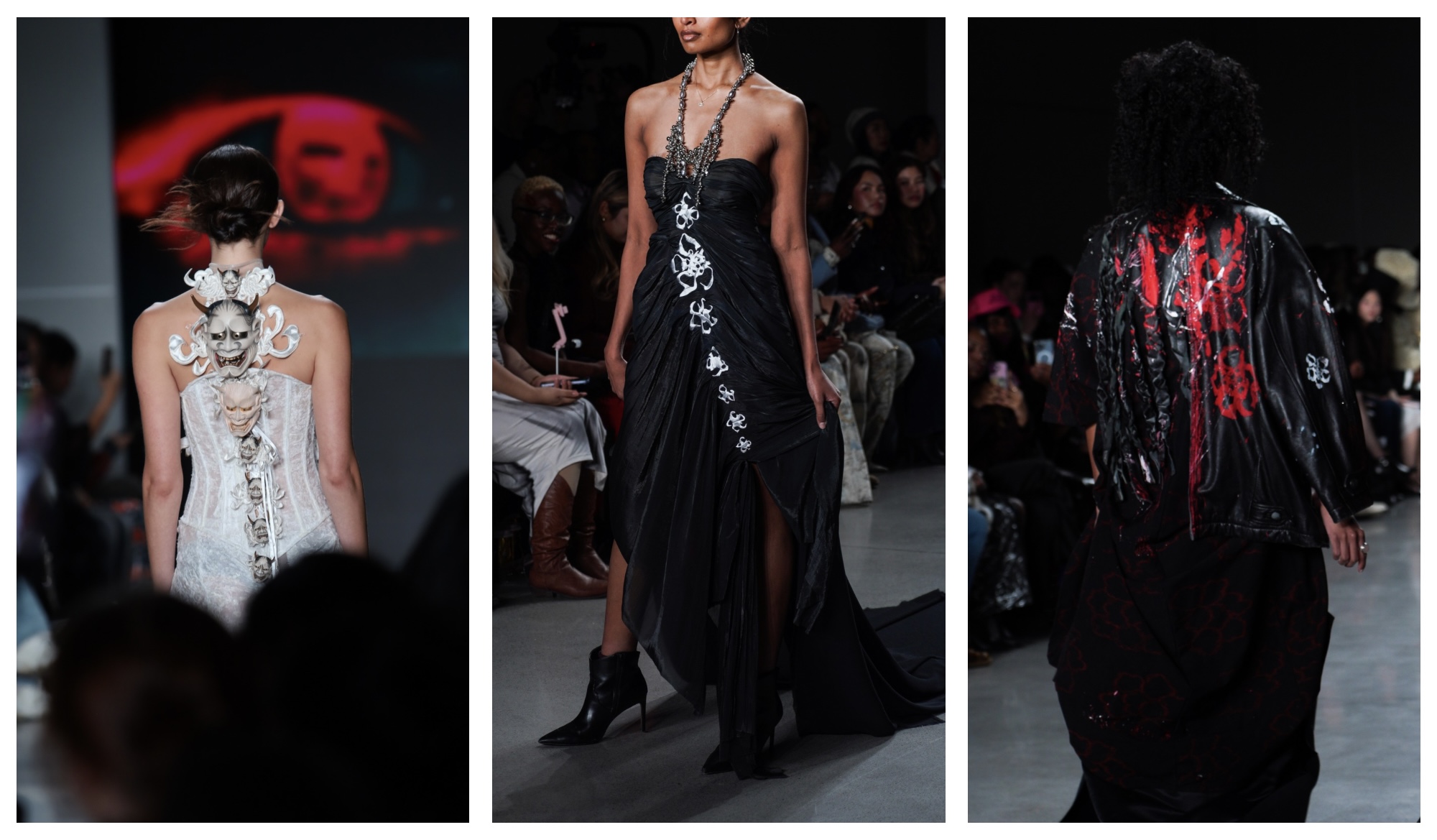
The world often views Japan as quiet, refined, and delicate. I believe this show will demonstrate that what I am presenting is not that ‘Default Japan.’
是非、変な感想をお待ちしております。
“So please, I welcome even the most bizarre impressions.”
Vand: You view your runway pieces as “Bodily Expression” rather than just clothes. What do you want the audience to feel?
Ao Miyasaka: The reason I brought themes like ‘Soul Murder’ into fashion is that I used to reject revealing costumes—not because of the clothes themselves, but because of the ‘gaze and treatment directed at that expression’ (その表現に向けられていたこれまでの眼差しや扱い).
While artists use the body as empowerment, I feel there is a need to update the ‘Gaze’ surrounding it. The gap in values between the performer and the viewer creates a disconnect. Beautiful for whom? Beautiful for what purpose?
「自由な表現」を更新するための「視線の更新」を表現しに来ました。
“I came here to express an ‘Update of the Gaze’ in order to achieve true freedom of expression.”
Vand: Finally, for our readers who are balancing their heritage with modern life: what is your message on Identity?
Ao Miyasaka: When I realized and accepted that I possess an identity that is uniquely mine, my path became clear. I feel that one’s roots become one’s treasure.
今回のコレクションで過去の自分へのR.I.P.を行い、新しい自分として生きていくつもりです。
“With this collection, I am performing an R.I.P. to my past self, and I intend to live on as a new self.”
Ao Miyasaka’s debut in New York is not a request for attention; it is a demand for introspection. By weaving the pain of the past into the fabric of the future, she offers a new definition of heritage—one that acknowledges the scars but refuses to be defined by them.
“Don’t look at us,” she says. “Look at yourself.”
And perhaps, in that reflection, we will find the strength to update our own gaze.
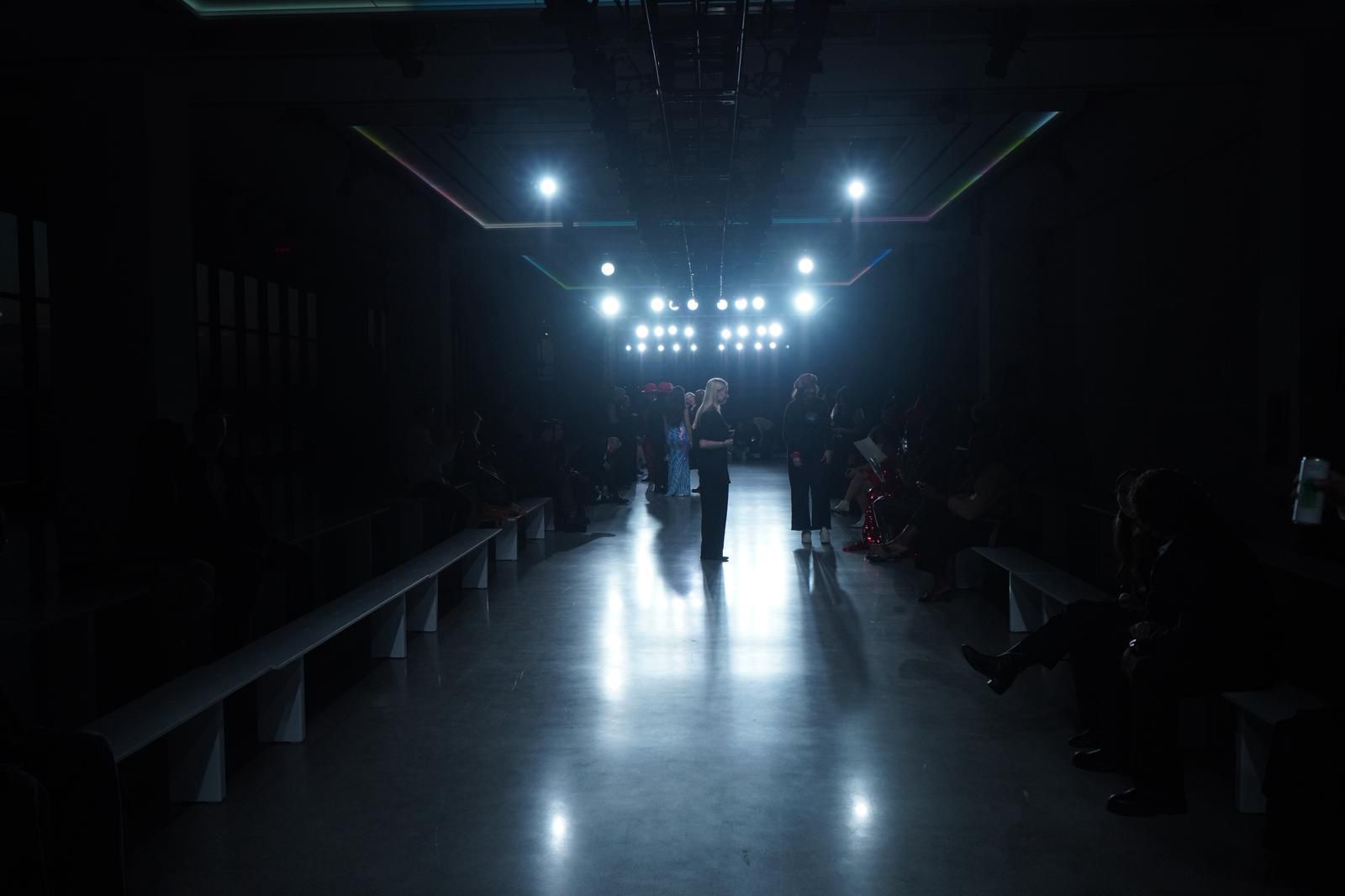
Ao Miyasaka presents her Couture Collection at New York Fashion Week with Global Fashion Collective, February 15, 2026.