by Vand Magazine Editorial Team
Vancouver Fashion Week FW26 begins not with spectacle, but with precision. Richard Wei, the Canadian designer chosen to set the tone for the season, arrives with City Lights—a collection that refuses the expected narrative of “Canadian fashion” and instead offers something far more complex: a study of duality, luminosity, and the hidden selves we inhabit after dark.
Wei’s work has appeared in Vogue, ELLE, and Harper’s Bazaar, but his greatest achievement may be this: he has managed to translate the geography of Vancouver, where mountains meet ocean, where nature collides with urbanism, into a design language that feels both grounded and expansive. It is a rare equilibrium, and one that mirrors the central tension of identity itself.
Vand: Your design language is shaped by Vancouver’s landscape. How does this physical geography shape your personal identity and aesthetic?
Richard Wei: Vancouver’s landscape has played a defining role in shaping both my personal identity and my design language. The city exists in a rare balance where mountains, ocean, and urban life coexist in a way that feels both grounded and expansive. That sense of equilibrium has deeply influenced how I think about form, proportion, and movement.
In my work, I often explore the relationship between opposing elements, structure and fluidity, precision and ease, strength and softness. This duality reflects the environment I live in, but it also mirrors how I see modern life: layered, adaptive, and constantly shifting.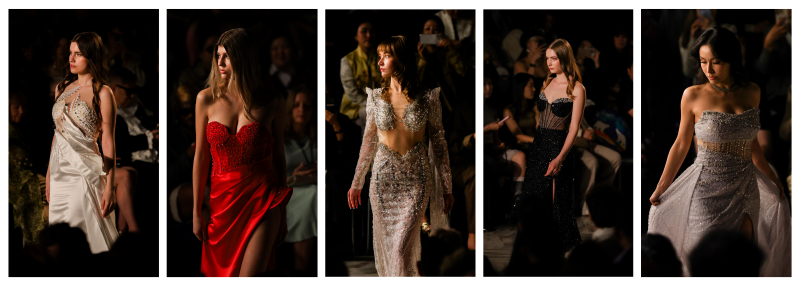
Wei’s articulation of “equilibrium” is not merely aesthetic—it is philosophical. In an era where identity is often discussed in binary terms, his insistence on coexistence (rather than synthesis or erasure) offers a more nuanced framework. The landscape does not choose between mountain and ocean; it holds both. Wei’s garments operate on the same principle.
Vand: You avoid traditional cultural clichés in your work. How do you infuse cultural heritage into contemporary silhouettes?
Richard Wei: For me, culture is not something that should be applied as a surface element—it is something embedded within the foundation of design. I consciously avoid relying on traditional symbols or literal references, because I believe that can sometimes limit the interpretation of the work.
Instead, I translate cultural influence into more subtle elements such as proportion, structure, and the overall rhythm of a garment. It becomes about how a piece feels, how it moves, and how it exists in space, rather than what it explicitly represents.
Growing up with exposure to both Eastern and Western perspectives has shaped my sensitivity to balance between restraint and expression, minimalism and detail. My work exists somewhere in between, creating a dialogue rather than choosing one over the other.
This is the crux of Wei’s approach to identity: it is felt, not declared. His cultural perspective is not costume; it is cadence. It lives in the discipline of a shoulder line, the restraint of a hemline, the quiet confidence of a garment that does not announce itself but simply is.
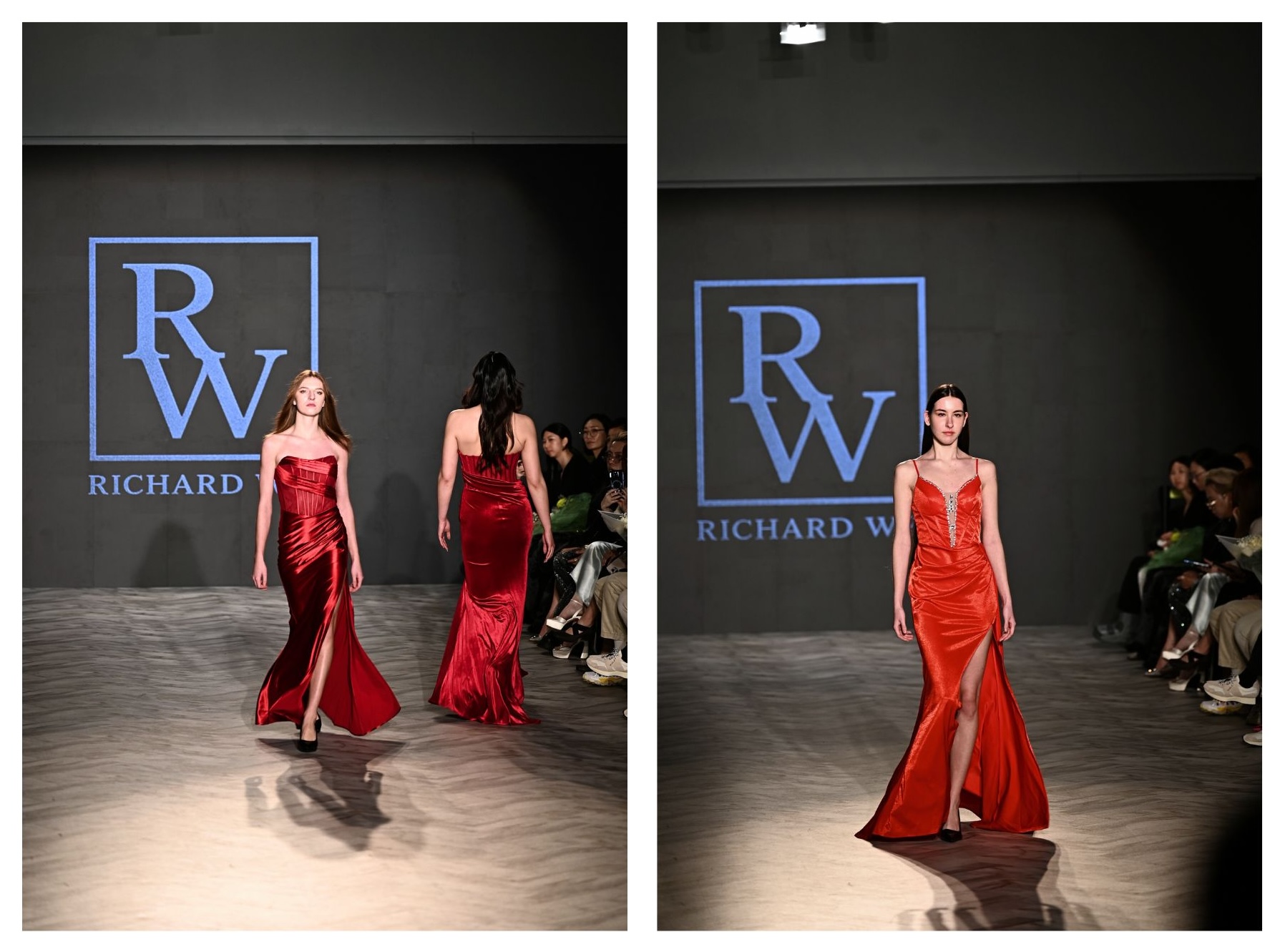
Vand: City Lights captures the kinetic energy of a metropolis after dark. Does this represent a hidden side of your own identity?
Richard Wei: I would say it is less about a single muse and more about a collective state of being. The energy of a city at night reveals a different layer of identity—one that is often more uninhibited, more expressive, and more individual.
People are not defined by a single role; they move between different versions of themselves depending on context, environment, and emotion. That fluidity is something I find deeply compelling.
On a personal level, the collection does resonate with me. As a designer, there is always a balance between discipline and freedom. The daytime often represents structure, responsibility, and precision, while the night allows for exploration, intuition, and a different kind of confidence.
Here, Wei articulates what Vand has long believed: that identity is not static, but situational. The self is not a monument; it is a city constantly illuminated, constantly shifting, endlessly alive.
Vand: As the opening designer for Vancouver Fashion Week, what statement do you want to make about the future of Canadian identity on the global stage?
Richard Wei: I want to present a vision of Canadian identity that is not singular, but multifaceted—diverse, open, and globally engaged. Canada is a place where different cultures intersect, and I believe that is one of its greatest strengths.
Through City Lights, I aim to express a sense of modern elegance that is rooted in this diversity. The collection reflects both individuality and cohesion, showing how different elements can coexist without losing clarity.
Ultimately, I want to communicate that Canadian fashion has a distinct voice. It is thoughtful, confident, and evolving and it deserves to be part of the global conversation, not on the periphery, but at the center.
Richard Wei does not open Vancouver Fashion Week with a plea for attention. He opens it with a proposition: that Canadian identity, like the city at night, is not one thing, but many things held in luminous tension. That sophistication and accessibility are not opposites. That refinement can be inclusive. That you can honor your roots without being defined by them.
City Lights is not just a collection. It is a recalibration of the gaze—an invitation to see Canadian fashion not as peripheral, but as essential. Not as derivative, but as definitive.
And perhaps, in that light, we will finally see ourselves clearly.
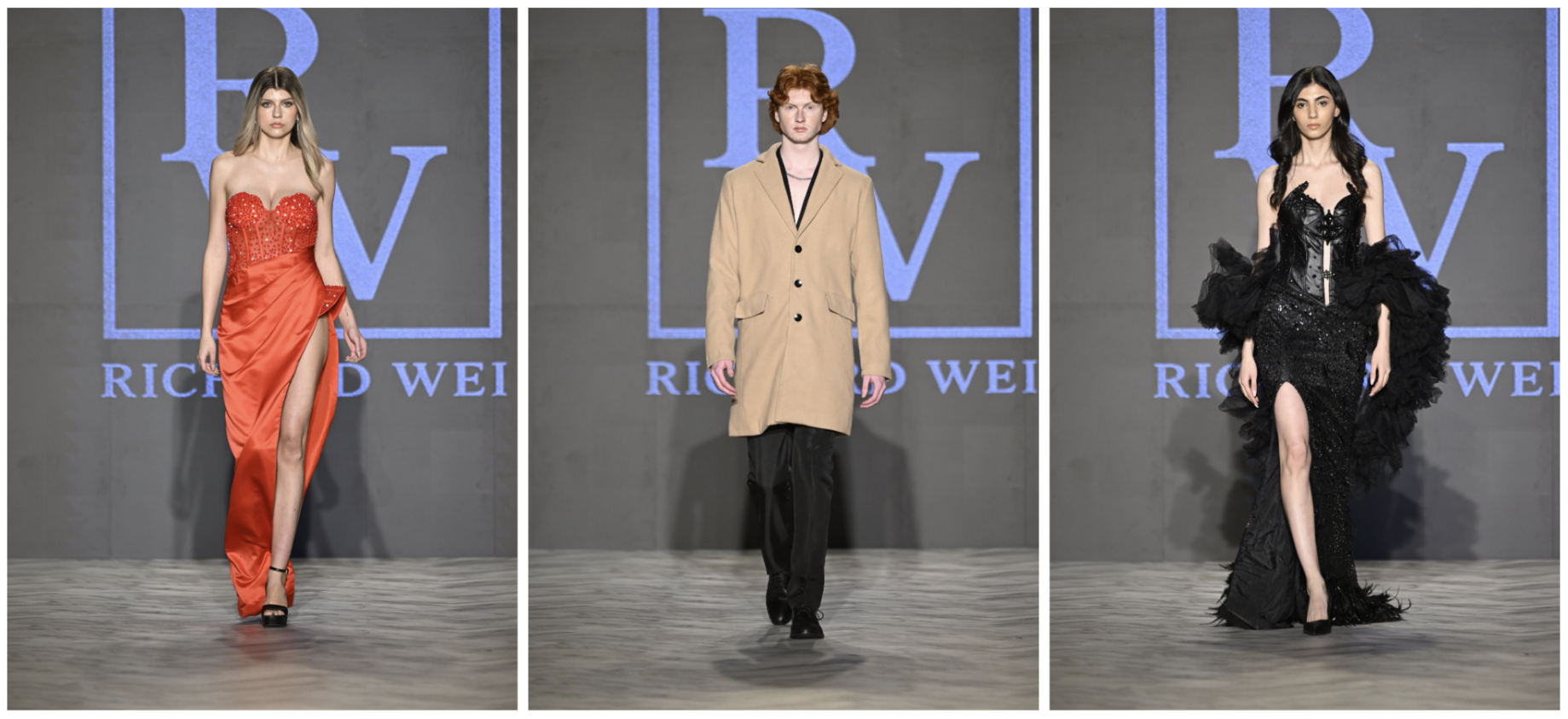
Richard Wei presents City Lights at Vancouver Fashion Week FW26, opening night.